Why Choose the Right Lawn Mower for Your Yard Needs?
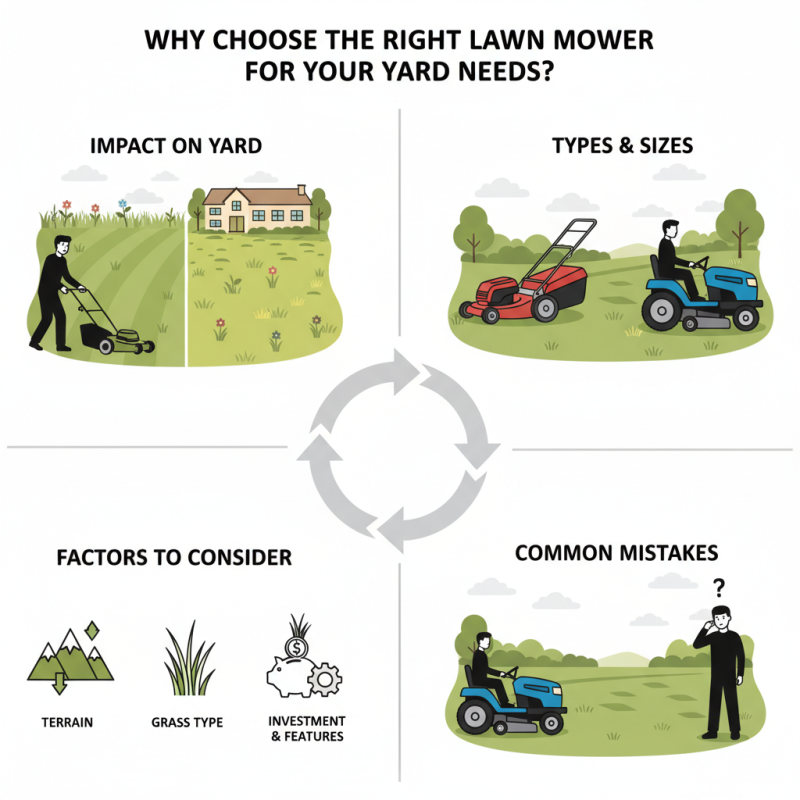
Choosing the right lawn mower for your yard can significantly impact its appearance and health. Renowned landscaping expert, John Doe, states, "Selecting the right lawn mower is crucial for achieving a pristine lawn." This highlights the importance of understanding your specific lawn care needs before making a purchase.
Lawn mowers come in different types and sizes. Each has its pros and cons. A residential yard might benefit from a simple push mower, while larger areas may require a riding mower. Many homeowners make the mistake of choosing a mower that doesn’t fit their yard. It's a decision that can lead to frustration and an uneven cut.
Consider factors like terrain and grass type. These details can help narrow down your choices. Reflect on your lawn’s unique challenges. For instance, hilly yards demand a mower with better traction. Sometimes, a more expensive model is worth the investment. However, it's not uncommon for buyers to overlook features that matter most. The right lawn mower can make yard work efficient and enjoyable.
Understanding Your Lawn Type and Its Mowing Requirements
When choosing a lawn mower, understanding your lawn type is crucial. Different grasses have unique needs. For instance, cool-season grasses thrive in northern climates. They grow best in spring and fall. In contrast, warm-season grasses need heat and sun. They flourish in summer. Recognizing your grass type helps you choose the right mower.
Mowing height matters. Some grasses require a higher cut to stay healthy. Others may not. For example, Bermuda grass often needs a shorter cut, while fescue does better when left taller. This understanding can prevent damage. Additionally, consider the terrain. Is it flat or uneven? A push mower may work on flat surfaces, but a riding mower can handle larger, hilly areas.
Paying attention to these details can make a significant difference. Many overlook their lawn's specific requirements. This can lead to unwanted results, like brown patches or unhealthy growth. Reflecting on your choices enhances your lawn care experience. It’s essential to ask questions. Why does my lawn look that way? A little research can go a long way toward creating a thriving yard.
Evaluating Different Types of Lawn Mowers: Pros and Cons
When choosing a lawn mower, consider the specific needs of your yard. There are several types of mowers available, each with its own benefits and drawbacks. Push mowers are great for small areas. They offer good control but can be tiring for larger lawns. Riding mowers save energy and time, especially on expansive properties. However, they require more storage space and can be costly.
Reel mowers present another option. They are eco-friendly and create a clean cut. Yet, they demand more physical effort. Battery-powered mowers provide convenience, but their runtime may be limited. It's crucial to think about your own physical ability and yard size. Some candidates for lawn care can be daunting for beginners. Assessing one's ability to manage a particular type of mower is vital. A mower that is too heavy or complicated might become a burden rather than a helpful tool.
Why Choose the Right Lawn Mower for Your Yard Needs?
| Type of Lawn Mower |
Pros |
Cons |
| Push Mower |
Affordable, good for small yards, eco-friendly |
Labor-intensive, requires physical effort |
| Self-Propelled Mower |
Easier to maneuver, suitable for uneven terrain |
More expensive, heavier |
| Riding Mower |
Great for large lawns, comfortable seating |
High cost, takes up more storage space |
| Electric Mower |
Quiet operation, low maintenance, eco-friendly |
Limited battery life, less powerful |
| Robotic Mower |
Automatic operation, saves time, advanced tech |
High initial cost, may struggle with obstacles |
Considerations for Engine Power and Cutting Width in Mowers
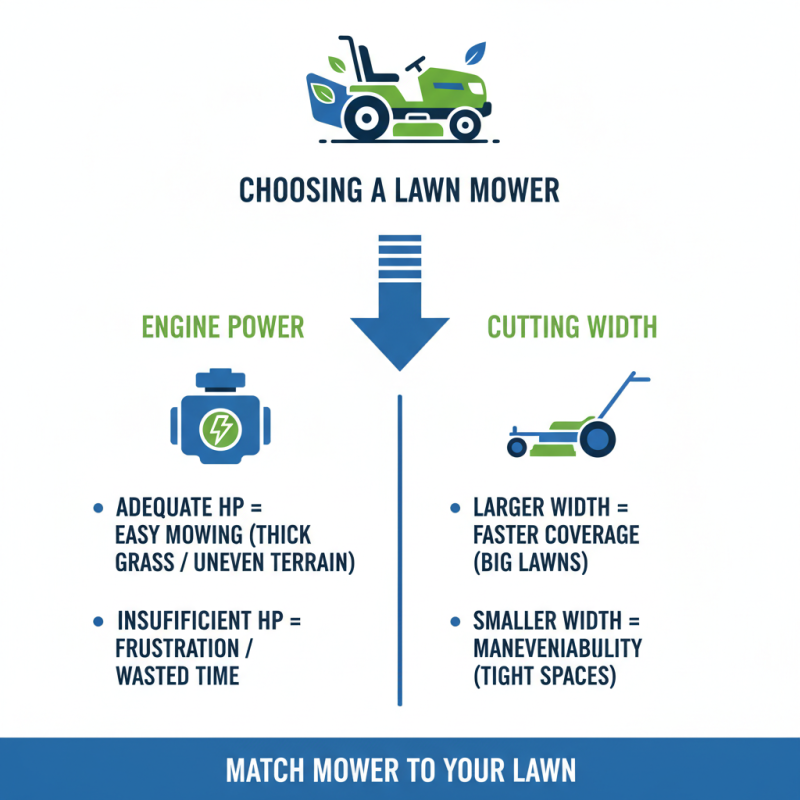
Choosing the right lawn mower involves careful consideration of engine power and cutting width. Engine power is vital for efficiency. A mower with adequate horsepower can tackle thick grass and uneven terrain with ease. If the power is insufficient, you may find yourself struggling to make progress. This can lead to frustration and wasted time on your weekend mowing.
Cutting width is equally important. A wider cutting deck allows you to cover more ground in less time. However, a too-wide mower can be cumbersome, especially in tight spaces. There’s often a balance to find. Sometimes, investing in a narrower mower makes sense for small yards with many obstacles. Remember, efficiency isn't just about speed. It’s also about effectively navigating your unique yard layout.
Choosing a mower isn't a one-size-fits-all decision. Reflect on your yard's needs before purchasing. You might think you need more power, but in reality, a well-designed, efficient mower can do the job just fine. Take the time to understand your preferences and yard size; doing so can help in making an informed choice.
How Mower Features Affect Efficiency and Ease of Use
Choosing the right lawn mower can significantly impact your yard's appearance and maintenance. Different models come with various features that determine efficiency and ease of use. For example, self-propelled mowers require less effort to maneuver. This can be a big plus for larger yards. However, some users find them too complicated at first.
Cutting width is another crucial factor. A wider blade can save time by covering more ground in one pass. Yet, it may be harder to navigate around trees and garden beds. Users often struggle with balancing speed and maneuverability. Additionally, adjustable height settings allow for customized cutting lengths. This feature is helpful, but it can sometimes be confusing.
Weight also plays a role in ease of use. Heavier mowers may have more powerful engines, but they’re harder to push. Some find themselves exhausted after just a short session. It raises questions about what truly matters: power or user comfort? Understanding these features can lead to a more efficient mowing experience. Choosing wisely will make a big difference in lawn care over time.