Why Choose the Right Agricultural Plough for Your Farm Needs?
Choosing the right Agricultural Plough can significantly impact your farm's productivity. According to Dr. Emily Carter, an expert in sustainable farming practices, "The right plough can enhance soil health and crop yield." As farmers face more challenges, the importance of selecting the suitable equipment becomes paramount.
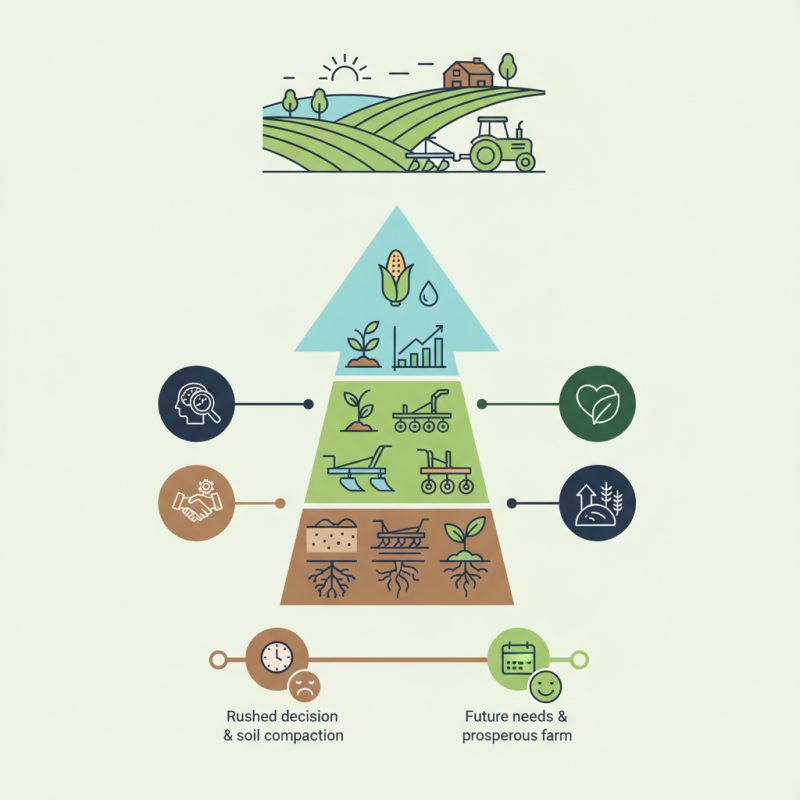
Different soils require different plough types. Understanding your specific conditions is key. A poorly chosen Agricultural Plough can lead to soil compaction. This can hinder root growth and water absorption, ultimately harming crops.
Investing time in research is essential. Farmers often rush decisions, leading to regret later. Each farm is unique, so customization is crucial. Choosing wisely ensures that your Agricultural Plough meets your needs now and in the future.
Understanding the Types of Agricultural Ploughs and Their Uses
Choosing the right agricultural plough can significantly impact your farming efforts. There are various types of ploughs designed for specific soil conditions and crops. Understanding these can help maximize your productivity and efficiency.
Mouldboard ploughs are one of the most versatile options. They turn the soil over, aerating it effectively. This type is suitable for deeper tilling and is excellent for breaking up compacted soil. Disc ploughs are another option, often used in tough soil. They can handle hard ground and are better at cutting through crop residues. However, they may require a more powerful tractor.
Subsoilers dig deep without turning the soil completely. They are great for breaking up hardpans and improving drainage. However, they can be more expensive and require skilled operation. Each tool has its own advantages and challenges. It is crucial to assess your specific farming needs before making a choice. Reflecting on what has worked or failed in the past can guide you in selecting the most suitable plough for your farm.
Key Factors in Selecting the Right Plough for Soil Conditions
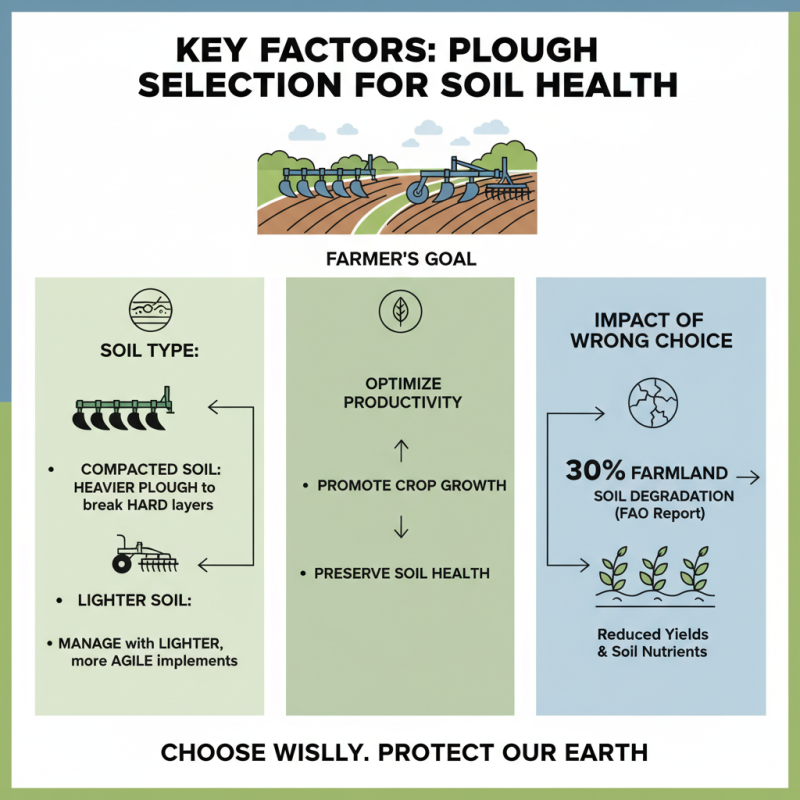
Choosing the right agricultural plough is crucial for optimizing your farm's productivity. Soil conditions vary across regions, affecting how well crops grow. For example, compacted soils may require a heavier plough to break through layers. In contrast, lighter soils can be effectively managed with smaller, more agile implements. According to a report by the Food and Agriculture Organization, an estimated 30% of farmland suffers from soil degradation, emphasizing the need for appropriate ploughing methods to preserve soil health.
When selecting a plough, consider the soil type and moisture levels. Sandy soils drain quickly while clay soils retain moisture. A study from the American Society of Agricultural and Biological Engineers highlights that choosing the wrong plough can reduce yield by as much as 20%. Farmers must also reflect on their equipment's maintenance requirements. A poorly maintained plough can contribute to uneven soil preparation, hindering crop emergence.
It's also worth noting that local conditions change, emphasizing the need for adaptable solutions. The pace of technological innovations presents both opportunities and challenges. Innovative plough designs may save time but may not suit every farmer's needs. Thus, staying informed and periodically reassessing your equipment is essential for long-term sustainability.
Impact of Ploughing Techniques on Crop Yields and Soil Health
Choosing the right plough affects both crop yield and soil health. Different ploughing techniques can alter soil structure, moisture retention, and aeration. For instance, conventional tillage can disturb soil ecology, leading to decreased organic matter. In contrast, reduced tillage methods can maintain soil integrity, promoting healthier root systems.
Tips: Experiment with different ploughing depths. Shallow ploughing may preserve soil life, while deeper ploughing can control weeds. Observe how your crops respond to these changes.
The impact of ploughing extends to nutrient distribution. Uneven ploughing can create nutrient pockets, leading to inconsistent crop performance. Farmers might overlook subtle signs of nutrient deficiency in their fields. Regular soil tests can reveal these imbalances early on.
Tips: Take notes on crop performance in different areas. Adjust your ploughing techniques based on this data. Over time, this practice can lead to improved yields and healthier soil. It's a learning process, and adapting is key.
Why Choose the Right Agricultural Plough for Your Farm Needs?
| Plough Type |
Impact on Crop Yields (%) |
Soil Health Improvement Score (1-10) |
Ideal Soil Type |
Recommended Usage Frequency (per season) |
| Mouldboard Plough |
15 |
8 |
Clay |
1-2 |
| Disc Plough |
10 |
7 |
Loamy |
2-3 |
| Chisel Plough |
12 |
9 |
Sandy |
1 |
| Rotary Plough |
18 |
10 |
All |
2-4 |
Industry Trends: Innovations in Plough Technology and Equipment Efficiency
Agricultural plough technology is experiencing significant innovation. The latest advancements focus on enhancing efficiency and reducing soil disruption. Modern ploughs often feature adjustable depth settings. This allows for precise soil preparation tailored to specific crop needs.
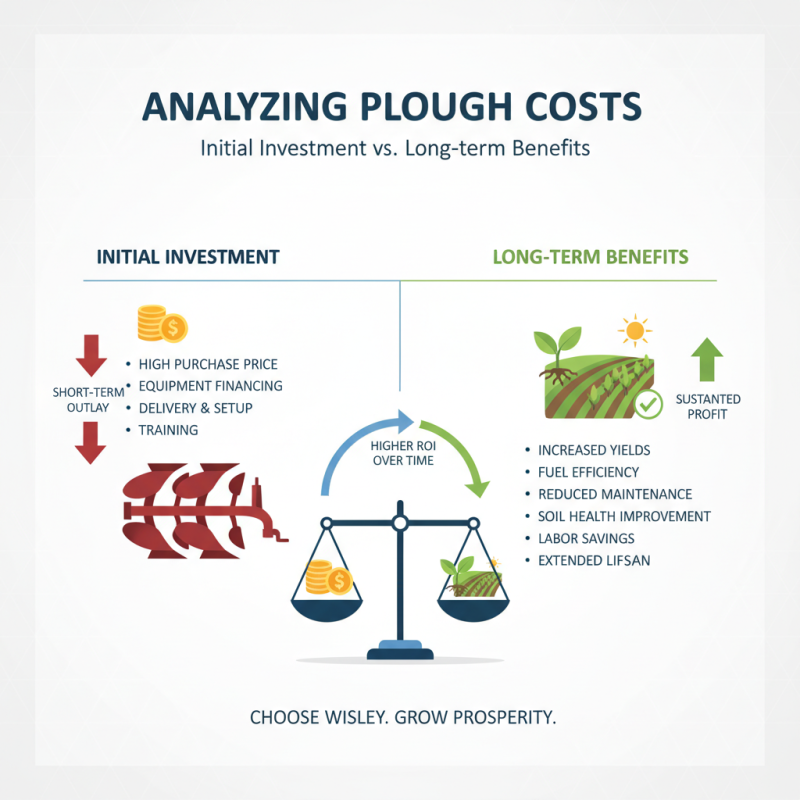
One key trend is the integration of precision farming techniques. GPS and automation are becoming standard in plough design. Farmers can now map their fields and manage soil health more effectively. The goal is to reduce resource use while maximizing yields. However, not all farmers are equipped to adapt to these changes. It requires investment in training and tools.
Sustainability is also a hot topic in plough development. Many new models promote reduced tillage practices. These practices limit soil erosion and improve water retention. Yet, some farmers remain hesitant. The learning curve can be steep, and not everyone may see the immediate benefits. Embracing these innovations involves trial, error, and ongoing education to truly realize their potential.