2026 How to Choose the Best Farm Harrow for Your Needs?
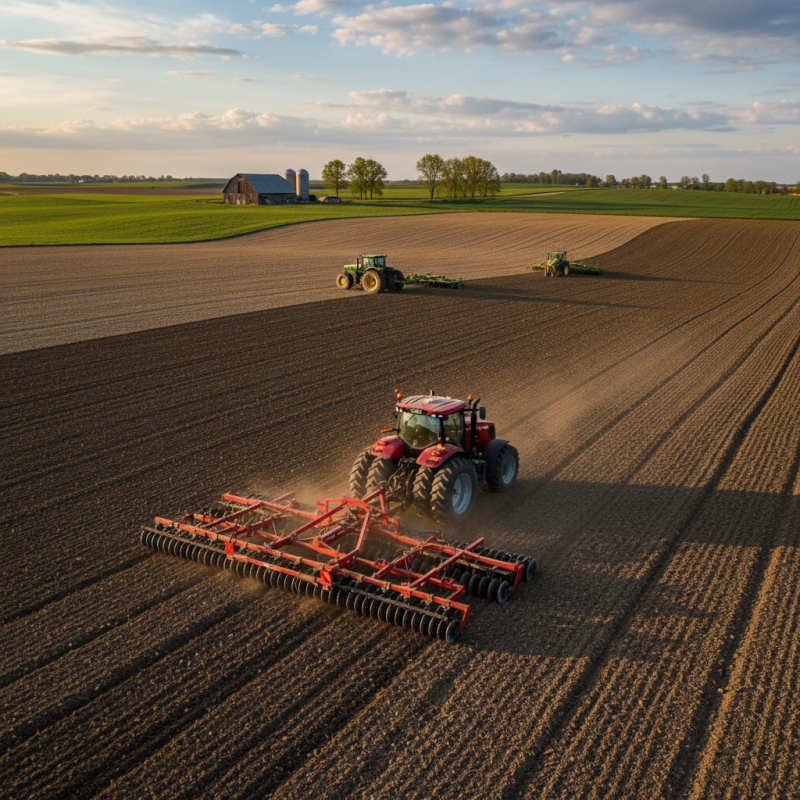
Choosing the right farm harrow can significantly impact your farming efficiency. With various options available, it's essential to assess your specific needs. A farm harrow prepares the soil, levels uneven land, and breaks up clumps.
When selecting a farm harrow, consider the size of your fields. Smaller farms may benefit from lighter models, while larger farms need robust equipment. Think about the type of soil you have. Different harrows work better in varying conditions. Your local environment also plays a role in this choice.
It's easy to overlook certain features. Take a moment to evaluate your current farming practices. Which tasks do you find most challenging? These reflections can guide you toward the best farm harrow for your needs. Remember, investing in the right tool can save you time and increase productivity.
Understanding Different Types of Farm Harrows: A Comprehensive Guide
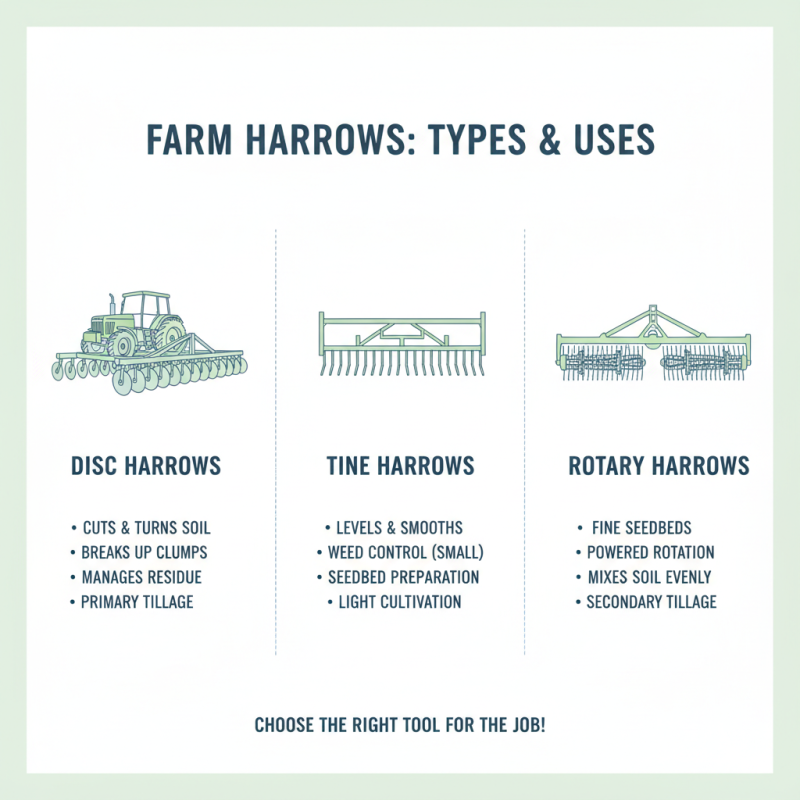
Farm harrows come in various types, each serving specific needs. Understanding these differences is key to making the right choice. The most common types include disc harrows, tine harrows, and rotary harrows.
Disc harrows are effective for breaking up soil and mixing residues. They work well in tough ground and can easily adjust for depth. However, they may leave some clumps behind. Tine harrows, on the other hand, are great for seedbed preparation. They can easily manage light to medium soils. Yet, in heavy clay soils, they struggle to perform optimally.
Rotary harrows blend well with different soil types. They can create a fine seedbed but may require more maintenance. It’s crucial to assess your land and goals before making a decision. Think about your soil type and crop needs. Achieving the best results with a harrow can take time. A good match may require trials and adjustments. Keep this in mind as you explore your options.
Key Factors to Consider When Selecting a Farm Harrow
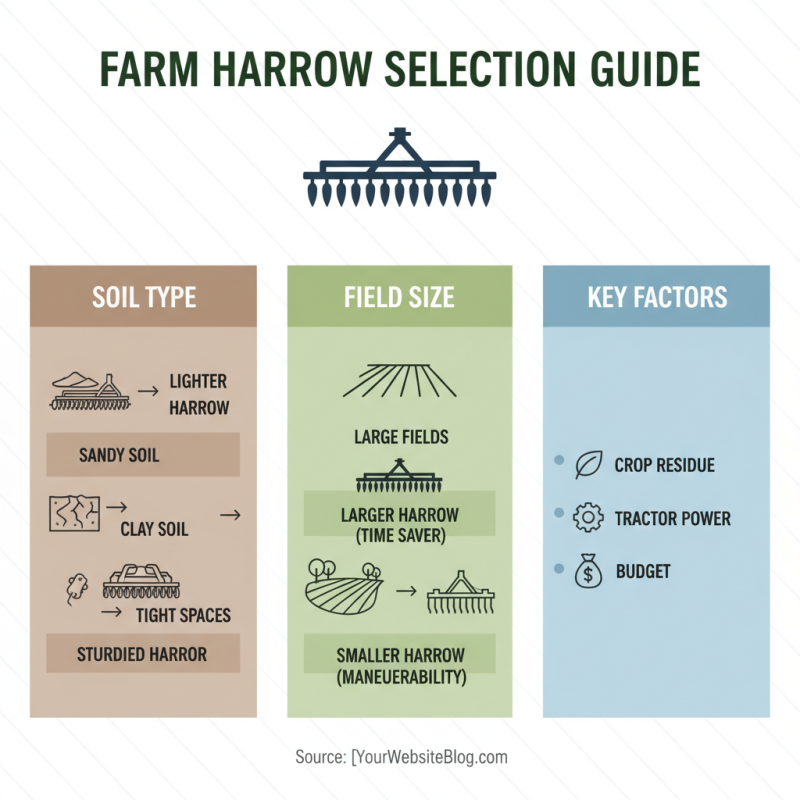
Choosing the right farm harrow is crucial. Several key factors can guide your selection. Think about the type of soil you’re dealing with. Sandy soil might need a lighter harrow, while clay might require something sturdier. Consider the size of your fields too. A larger harrow can save you time, but it may be harder to maneuver in tighter spaces.
Pay attention to the weight and durability. Heavier harrows tend to penetrate the soil better. However, they can be challenging to transport. Also, check the harrow design. Some have flexible parts that adapt better to uneven terrain. You might find that certain designs work better in specific conditions.
Don’t overlook maintenance. A more complex model may demand more upkeep. Consider your ability to repair or service your equipment. Sometimes, simpler options are less daunting. Reflect on how often you plan to use the harrow. Spending too much on a model you'll rarely use could lead to buyer's remorse.
Evaluating the Soil Type: How It Affects Harrow Selection
Choosing the right harrow for your farm starts with understanding your soil type. Soil texture significantly influences the effectiveness of a harrow. For instance, sandy soil typically allows for faster drainage. This means you might benefit more from a lighter harrow. Conversely, clay soil holds moisture well. A heavier harrow could work better here, aiding in soil leveling and breaking up compacted areas.
According to the USDA, around 25% of arable land in the U.S. has clay soils. These soils can be tricky. They often require careful management when using harrows. If you choose the wrong type, you might risk compacting the soil further. On the other hand, loamy soils, which are more common, offer a balance. They can accommodate various harrow types effectively but still require attention to detail.
Your local agricultural extension service may have specific recommendations. However, personal trial and error also plays a role. You may notice inconsistencies in performance. Perhaps some fields respond better than others. Pay attention to these nuances. Record your results carefully, adjusting your approach as necessary. This can lead to a more tailored and successful farming practice.
Efficiency Metrics: Analyzing Cost vs. Performance in Harrow Use
When selecting a farm harrow, efficiency is key. Understanding cost versus performance can significantly impact your farming operation. A harrow that excels in performance may not always be the most affordable. It is essential to evaluate what suits your specific needs the best.
Consider the type of soil you’ll be working with. Different soils demand different harrowing techniques. For instance, a heavy clay soil may require a more robust harrow. Assess the acres you need to cover too. A harrow that performs well in small fields may not hold up in larger spaces.
Tips: Always calculate your budget carefully. Sometimes, it’s tempting to go for a cheaper model. Still, a more durable harrow might save you money in the long run. Regular maintenance can improve performance and extend its lifespan. Pay attention to user reviews for insights on efficiency.
In times of change, you might face inconsistent performance. Adaptability can be more valuable than you think. Choose a harrow that fits your operational needs, even if it’s not the most obvious choice. Performance should always align with your farming goals.
Efficiency Metrics: Analyzing Cost vs. Performance in Harrow Use
Maintenance and Durability: Ensuring Longevity of Your Farm Harrow
When considering the longevity of your farm harrow, maintenance is key. Regular inspections can help identify wear and tear early. Look for bent tines or damaged frames. Neglecting these issues can lead to more expensive repairs down the line. Small problems can escalate quickly. Keep a close eye on your equipment.
Tips: Clean your harrow after each use. Dirt can promote rust. Store it in a dry place. A simple cover can also protect it from the elements.
Durability often hinges on the materials used. While some harrows may look sturdy, their quality can vary significantly. Check the specifications carefully. A heavy-duty model may seem expensive, but it pays off over time. Be cautious about cheaper options. They may not last through demanding seasons.
Tips: Lubricate moving parts regularly. This helps prevent friction and wear. Replace worn out parts promptly. It’s the small routines that ensure your harrow remains functional.
2026 How to Choose the Best Farm Harrow for Your Needs? - Maintenance and Durability: Ensuring Longevity of Your Farm Harrow
| Feature |
Description |
Maintenance Tips |
Estimated Lifespan |
| Material |
High-quality steel or alloy for durability |
Regular inspection for rust and damage |
10-15 years with proper care |
| Weight |
Optimal weight for effective soil penetration |
Avoid overloading and ensure balanced load |
8-12 years under ideal conditions |
| Construction Type |
Foldable or rigid design options |
Ensure all joints and hinges are lubricated |
12-15 years with routine maintenance |
| Harrow Type |
Disc harrow or tine harrow options |
Regular cleaning after use to prevent worn parts |
10-15 years with proper usage |
| Ease of Use |
User-friendly controls and adjustments |
Train operators on proper usage and safety |
Varies, depending on operator habits |